Can You Add Recessed Lighting Without Attic Access? A Sandy Springs Townhouse Shows How
See how Fuse Crew Electrical added recessed lighting to a Sandy Springs townhouse with no attic access, transforming a dark living room with four LED lights.
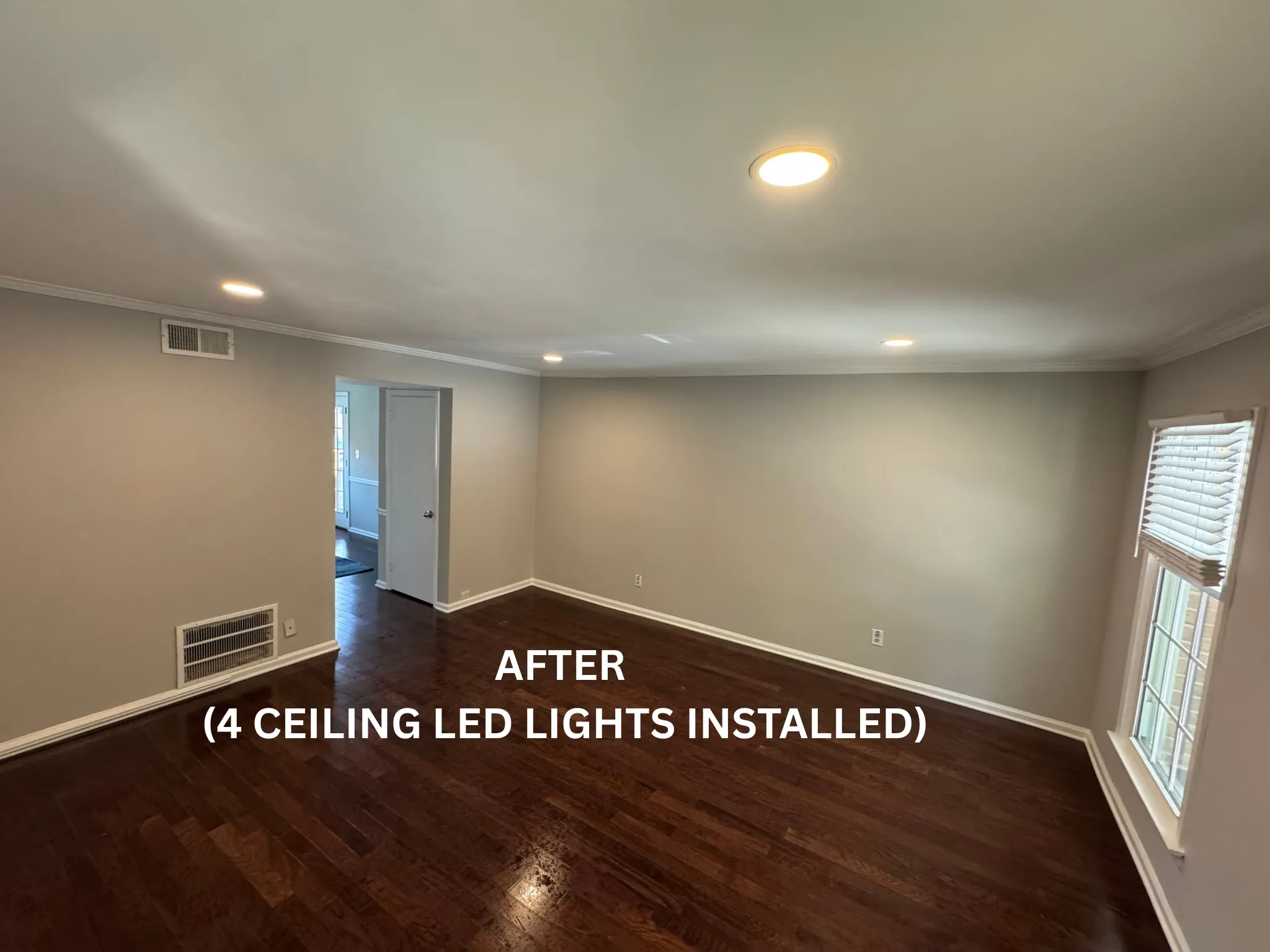
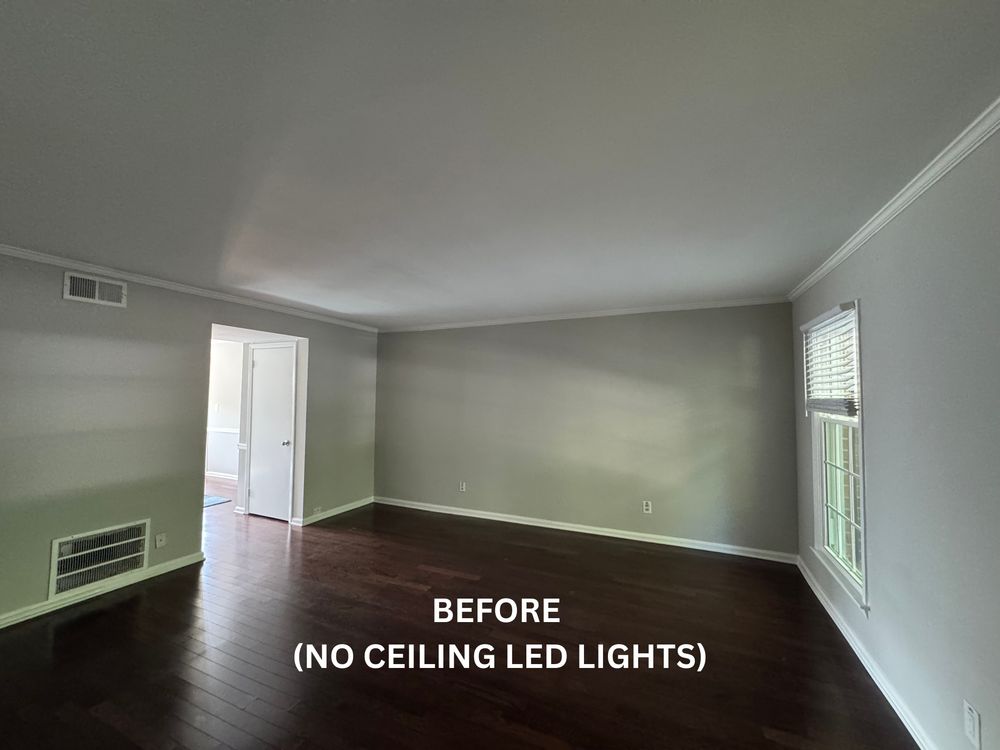
One of the first things this Sandy Springs homeowner told us was that the living room needed more light.
He knew the room well. He had lived in this three-bedroom townhouse himself for about a year before turning it into a rental property. Now that tenants were living there, he wanted to make an improvement to the main level, specifically the living room where they watch TV, relax and spend a lot of their time.
His original idea was a ceiling fan with a light.
After looking at the room, we suggested something different.
The ceiling wasn't especially high, and our concern was that adding a fan would bring another object down into the room without really solving the lighting problem as well as it could be solved. Four low-profile LED recessed lights would give him much better coverage while keeping the ceiling visually open.
He agreed, and that's when the interesting part of the job started.
Adding Recessed Lighting to a Townhouse With No Attic Access
Installing recessed lighting is pretty straightforward when you have an attic above you. You can get above the ceiling, run your cable, drill through framing and position everything from the attic.
We didn't have that luxury here.
This was a townhouse in Sandy Springs with finished space above the living room. Everything we needed to do had to happen from underneath the finished ceiling.
That matters because electricity isn't the only thing hiding above drywall. You have ceiling joists, blocking, plumbing, HVAC and other obstacles that can determine where and how a new wire can travel.
On this particular job, the joists didn't even cooperate by running one consistent direction. We encountered framing running in different directions as we worked our way across the room.
So this wasn't a matter of cutting four circles, pulling some wire and snapping four lights into place.
We spent the day opening strategic access points in the ceiling, working our way through the framing and getting the new wiring from the existing power source to all four new light locations.
In total, we had to make about six access openings in the ceiling to make the wire run work correctly.
That's the part of a recessed lighting installation most homeowners never see.
Why We Recommended Four LED Recessed Lights Instead of a Ceiling Fan
There wasn't anything inherently wrong with the homeowner's original ceiling fan idea. It just wasn't what we thought would make the biggest improvement to this particular room.
That's an important distinction.
Sometimes our job as an electrician isn't simply to install whatever was originally requested. If we see another option that we think makes more sense, we're going to explain why.
In this room, four low-profile recessed LED lights accomplished a few things at once.
They spread the light across the entire living area instead of concentrating it in the center of the room. They didn't take away any overhead space. Visually, they made the ceiling feel cleaner and the room feel larger.
We also installed a dimmer.
That was important because maximum brightness isn't always what you want in a TV room. The homeowner now has enough light to really brighten the living room when needed, but the tenants can bring it down in the evening when they're watching television or relaxing.
It's a small detail, but it makes the finished installation much more useful.
The Hard Part Was Getting the Wire There
People understandably look at the finished product and see four lights.
As electricians, we're thinking about the path between the switch and those four lights.
With no attic access, you have to figure out how you're going to get cable through a finished ceiling without unnecessarily destroying the ceiling in the process. Every cut should have a purpose.
We used the openings available to us, made additional access cuts where they were actually necessary, and worked through the ceiling framing to create a path for the new wiring.
It takes longer than an installation with open attic access. There's also a point where you can't know exactly what you're dealing with until you make that first opening and see how the home was framed.
That's why we'd be cautious of anyone promising that recessed lights can always be added to a finished townhouse ceiling with absolutely no drywall cuts. Sometimes they can. Sometimes the framing makes that impossible.
The goal isn't to pretend the cuts won't happen.
The goal is to make the cuts intelligently and then put everything back together correctly.
We Didn't Want to Leave Six Holes Behind
Originally, our electrical scope required the access openings necessary to complete the installation. Drywall finishing was separate from that work.
But once the four lights were installed and working, we talked with the homeowner about the ceiling.
He could have hired somebody else to come behind us and repair it. Instead, we gave him the option of letting us finish what we'd started.
We put the removed drywall sections back into place and mudded the repair areas. We then returned to sand the drywall mud smooth, prime the repaired areas and spot paint the ceiling.
Was spot painting the same thing as repainting the entire ceiling? No, and we were clear about that.
This is a rental property, and repainting an entire living room ceiling wasn't necessarily an expense that made sense for this particular project. Spot painting gave the homeowner a practical way to finish the areas we had opened without turning a lighting upgrade into a larger painting project.
By the time we were finished, we hadn't simply installed the lights. We had taken the room from the original ceiling, through the messy part of getting new wiring where there had never been wiring before, and back to a finished living space.
That's the kind of service we want Fuse Crew Electrical to be known for.
Can Recessed Lights Be Installed Without an Attic?
Yes.
This Sandy Springs townhouse is a good example.
Lack of attic access does not automatically mean recessed lighting can't be added. It does mean the installation needs to be approached differently.
An electrician may need to make access openings in the drywall to drill through framing and fish cable between the new light locations. How many openings are necessary depends heavily on the home's construction, the direction of the joists, the location of the existing power source and where the new lights are going.
Modern low-profile LED fixtures are particularly useful in situations like this because they don't require the large traditional recessed cans people may picture when they hear "recessed lighting."
But the fixture itself is the easy part.
Getting power safely and correctly from one side of a finished room to the other is where experience matters.
A Small Electrical Upgrade That Changed the Living Room
The finished project wasn't flashy.
Four lights. One dimmer.
But turn them on and the room feels completely different.
The living room is brighter from one end to the other. The low-profile fixtures don't compete with the relatively low ceiling. The dimmer gives the tenants control over the room depending on what they're doing.
And from the homeowner's perspective, he upgraded one of the most-used rooms in his rental property without doing a major renovation.
That's why we liked this solution better than the original ceiling fan idea.
The fan would have checked the box.
The recessed lighting actually improved the room.
Recessed Lighting Installation in Sandy Springs, GA
If you're considering recessed lighting installation in Sandy Springs, GA, don't assume you're out of options because there's another floor above the room or you don't have attic access.
We've done exactly that type of installation.
Fuse Crew Electrical can look at the existing power, ceiling construction, switch locations and the way you actually use the room and help determine what makes sense. Sometimes that's a ceiling fan. Sometimes it's recessed lighting. Sometimes we get there and recommend something different than either one.
We'd rather figure out the right solution for the room than simply install something because it was the first idea.
Fuse Crew Electrical
Serving Sandy Springs and the surrounding Atlanta area.
Wired Right, Powered Bright.